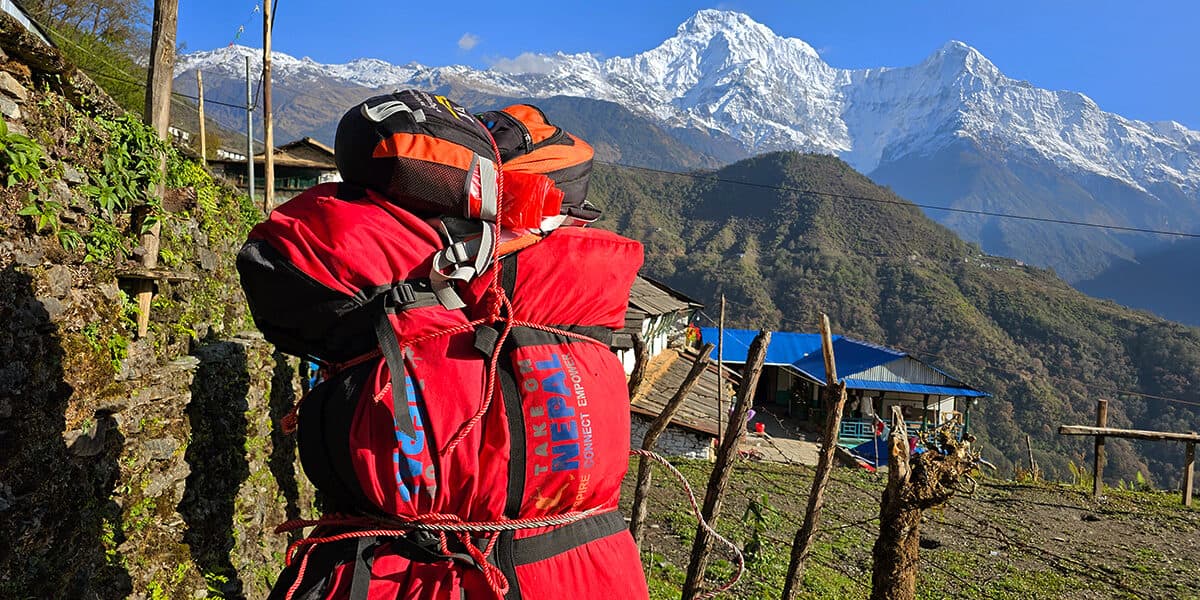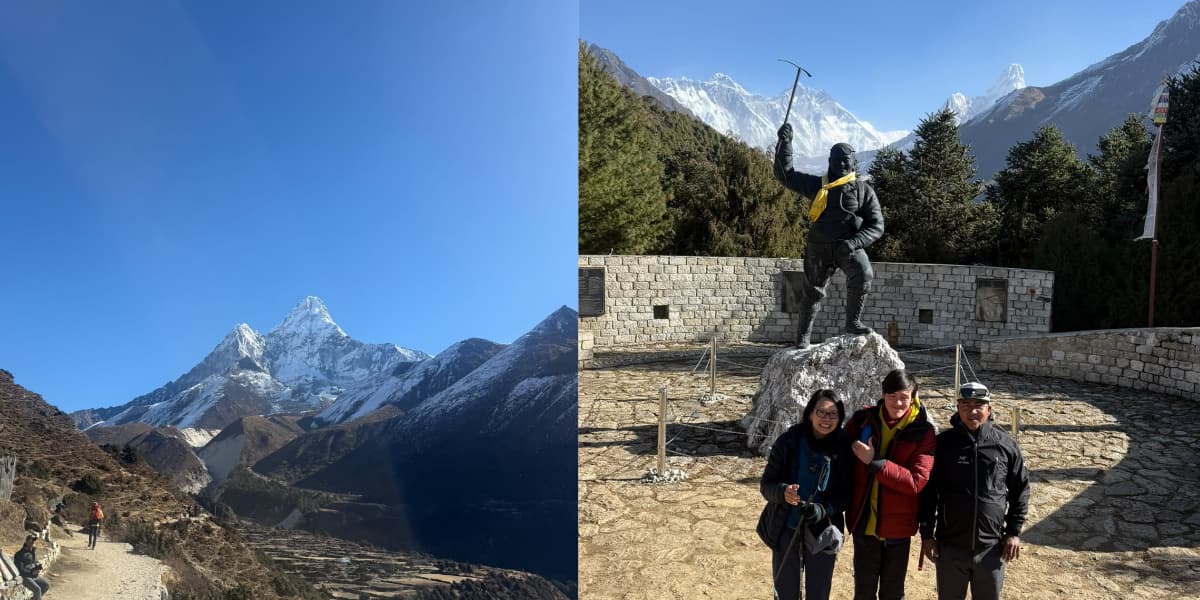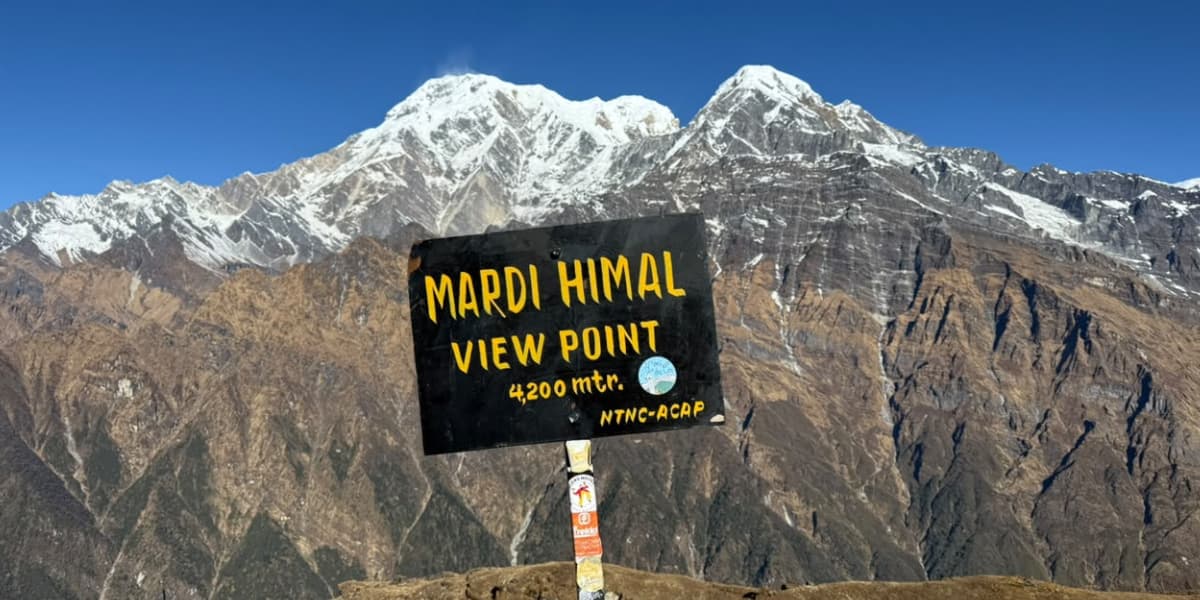
By the Take On Nepal team Anil Tamang
The Mardi Himal Trek and the Annapurna Base Camp (ABC) Trek both start near Pokhara. Both sit in the Annapurna Conservation Area and both look straight at Machhapuchhre (Fishtail, 6,993 m). They are still two very different walks.
This year our senior guide Anil Tamang , who has led the Annapurna Base Camp trek many times, took a Take On Nepal team up the Mardi Himal ridge for the first time. The aim was to measure distances, photograph the trail, check the terrain and compare it honestly with ABC. This guide is what we found.
"If I was trekking just for enjoyment, with my family or on my own, I'd choose Mardi Himal. It's safer, the views are great, and it's not so hard." Anil Tamang and the Take On Nepal guiding team
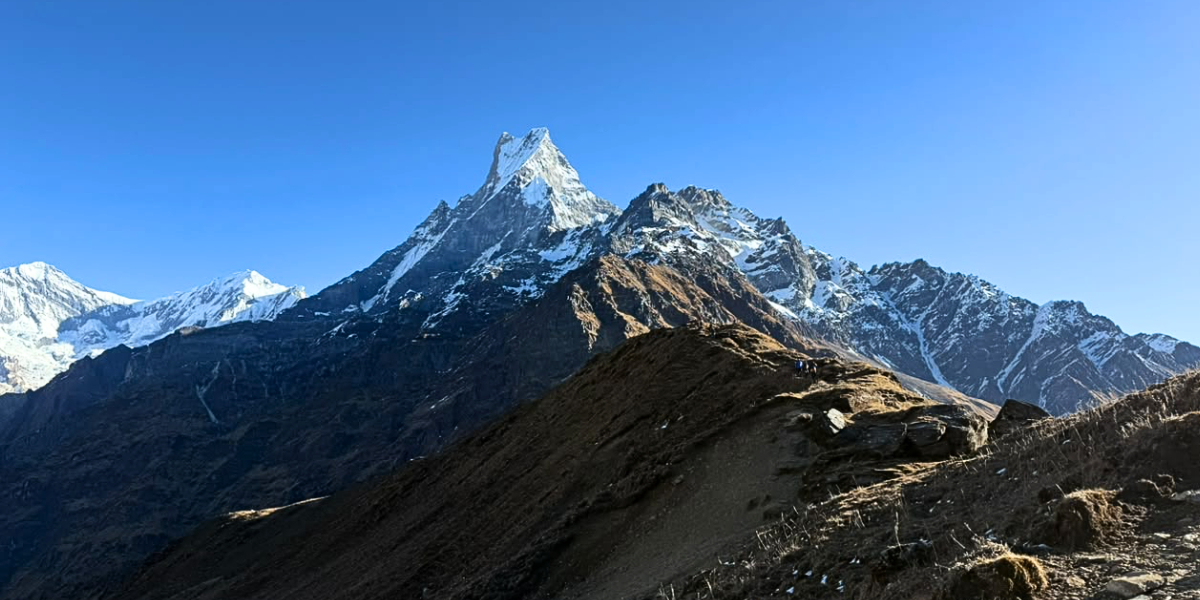
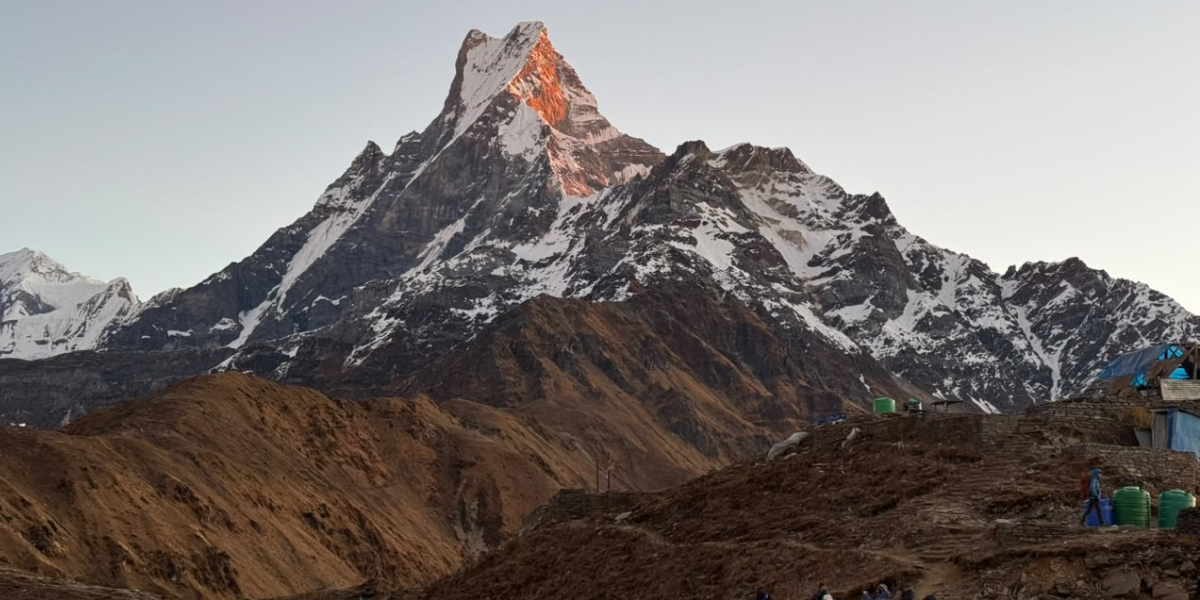
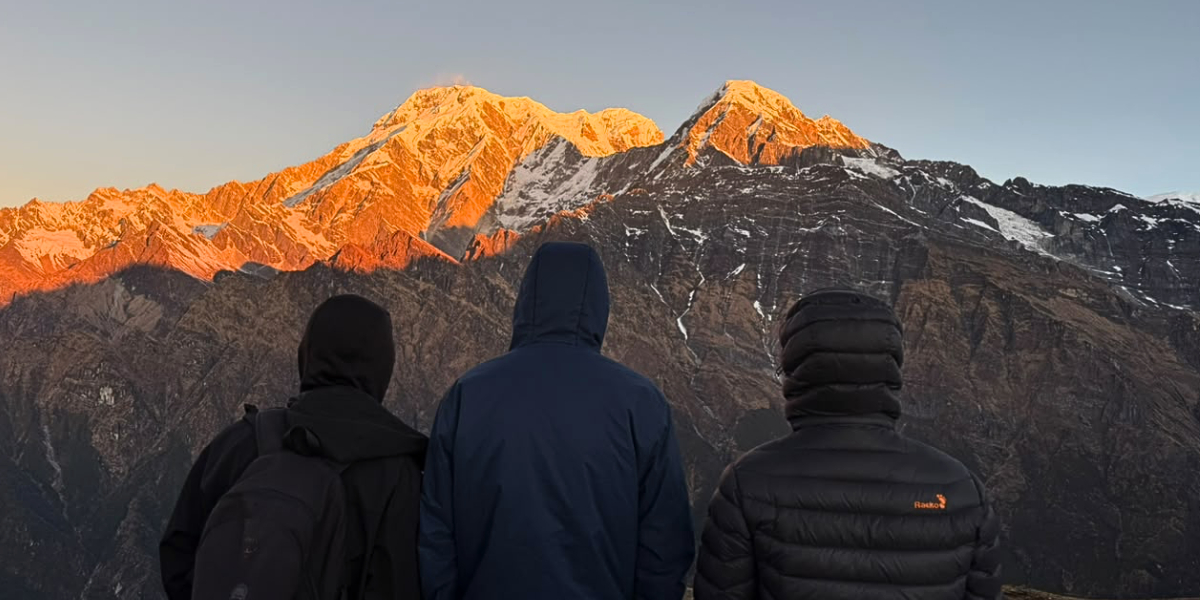
Mardi Himal ridge trail with Machhapuchhre behind
Mardi Himal vs Annapurna Base Camp at a Glance
Mardi Himal Trek
Annapurna Base Camp Trek
Highest point
Mardi Himal Base Camp, about 4,500 m
Annapurna Base Camp, 4,130 m
Highest night's sleep
High Camp, about 3,580 m
Annapurna Base Camp, 4,130 m
Walking distance
About 20–25 km one way; about 40–50 km in total
About 85 km in total on our route from Nayapul
Days on the trail
6–7
Terrain
Steady, gradual climb along a forested ridge
Many steep ups and downs and thousands of stone steps
Main hazards
Wind, cold and ice on the exposed upper ridge
Avalanche zone between Deurali and MBC, landslides, freezing nights
Views
Wide panoramas of the peaks from a distance
Close up inside the Annapurna Sanctuary: snow, glacier and moraine
Best for
Beginners, families, older trekkers
Fit, prepared trekkers after a big classic
Take On Nepal trip
11 days, from AUD 1,290 2025 Rate
12 days with flights, from AUD 2,390 2025 Rate
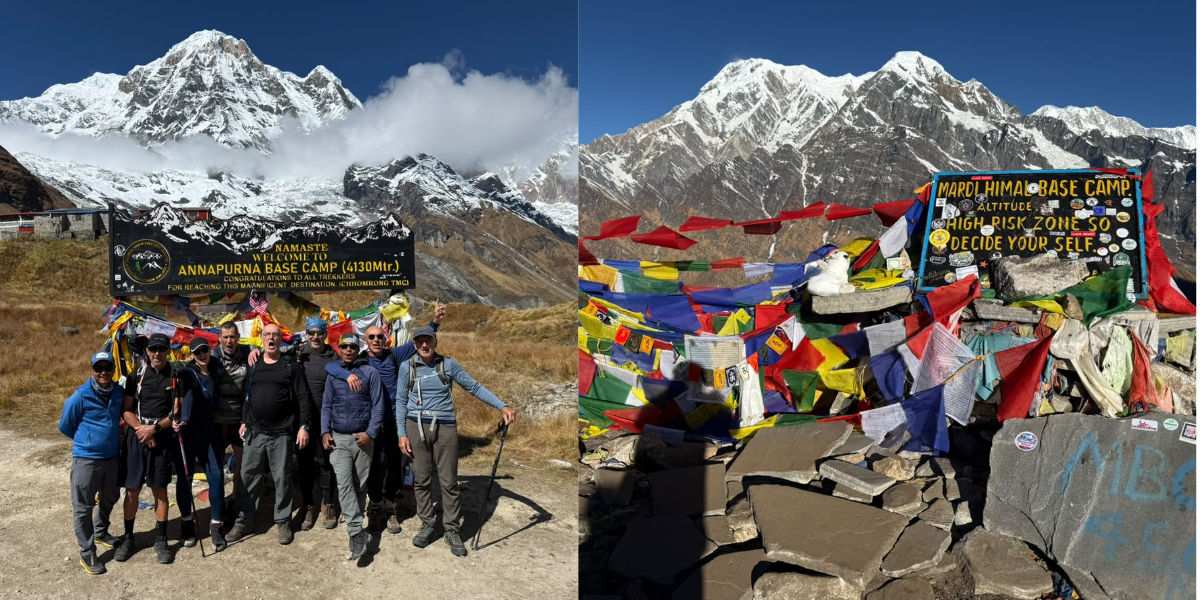
1. Distance: How Far Is Each Trek?
Mardi Himal: From the trailhead at Kande or Phedi to Mardi Himal Base Camp is about 20–25 km one way. The exact figure depends on where your vehicle drops you. The route climbs through Australian Camp, Pothana and Pitam Deurali (2,100 m), then Forest Camp (about 2,550 m), Low Camp (about 2,970 m) and High Camp (about 3,580 m). From High Camp you make an early-morning return trip to the Upper Viewpoint (about 4,200 m) or Base Camp. You then come down a different way, through Siding (about 1,700 m) to the road at Lumre. Most days are only 4–6 km.
Annapurna Base Camp: Our itinerary from Nayapul goes through Ghandruk (1,940 m), Chhomrong (about 2,170 m), Dovan (about 2,500 m) and Machhapuchhre Base Camp (3,700 m) to ABC (4,130 m). We return through Jhinu Danda (about 1,780 m), where there are hot springs. That's about 85 km of walking, mostly 10–16 km a day. Some groups drive further up the new roads to start, so totals you see online range from about 70 km to 110 km.
The difference: ABC involves close to twice the walking of Mardi Himal, and much of it is on stone staircases.
2. Altitude: The Surprise Most People Get Wrong
Mardi Himal Base Camp (about 4,500 m) is actually higher than Annapurna Base Camp (4,130 m). So why is Mardi Himal the easier altitude experience?
• You sleep lower on Mardi Himal. Your highest night is at High Camp, about 3,580 m. You go up to the viewpoint or Base Camp in the morning and come straight back down. This is the "climb high, sleep low" approach that helps prevent altitude sickness.
• You sleep at 4,130 m on ABC. Sleeping above 4,000 m is when headaches, poor sleep and altitude sickness become more common.
• Mardi Himal climbs gradually, ridge camp by ridge camp. On ABC you lose and regain height again and again.
Altitude still needs respect on both treks. Walk slowly, drink plenty of water and tell your guide straight away if you feel unwell.
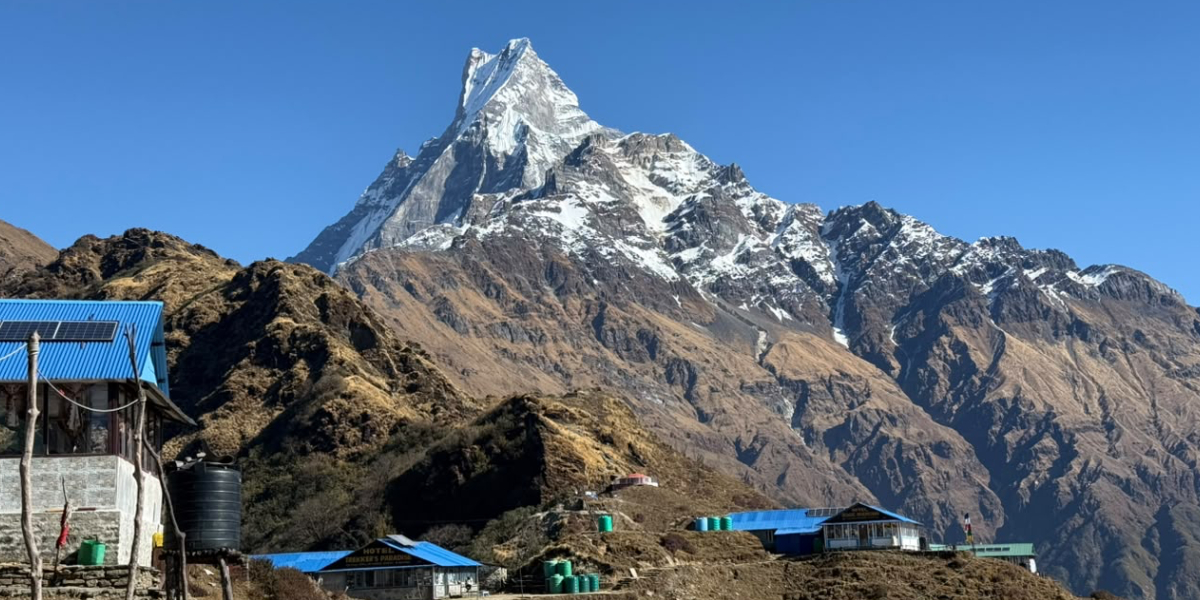
Mardi Himal High Camp tea houses
3. Difficulty: Gentle Ridge vs Thousands of Steps
Mardi Himal is a steady, gradual climb. The trail follows a ridge through rhododendron, oak and moss forest before climbing above the treeline. There are no big descents on the way up, so every hour of effort takes you higher. The steepest part is the final push from High Camp to the viewpoint, and you do it with a light day pack.
Annapurna Base Camp involves far more ups and downs. The trail drops to river crossings and climbs back out again and again, with long stone staircases around Chhomrong and Jhinu. Many trekkers find the downhill steps harder on their knees than the climbs. ABC can be a very challenging trek for beginners. Mardi Himal is a moderate trek that suits them well, and it's a fair physical and mental test that won't overwhelm you.
4. Safety: Avalanches, Landslides and Cold
Annapurna Base Camp: The narrow Modi Khola valley between Deurali and Machhapuchhre Base Camp sits beneath steep slopes, and avalanches have hit this section in the past. After heavy snow, mainly in winter and early spring, the trail can be closed or trekkers told to wait. Lower down, heavy rain can trigger landslides. Nights at ABC regularly drop well below freezing.
Mardi Himal: The standard route follows the top of a ridge, so there is no avalanche-prone valley to cross. The main hazards are wind, cold and occasional ice or snow above High Camp, mostly in winter. If visibility is poor, your guide may turn the group back at the Upper Viewpoint. Because you sleep lower, the trek is also noticeably less cold.
No mountain trek is completely risk-free, but Mardi Himal is clearly the lower-risk choice.
5. Who Is Each Trek Best For?
Choose Mardi Himal if you are:
• A first-time trekker in Nepal or at altitude
• Trekking as a family, or with older parents
• An older trekker who wants big views without endless stairs
• Looking for a physical and mental test before a bigger trek
• After a quieter trail with fewer crowds
Choose Annapurna Base Camp if you:
• Want to stand among the glaciers with Annapurna I (8,091 m) right in front of you
• Are already fit and have trained on hills and stairs
• Are comfortable spending a night above 4,000 m
• Want to tick off one of the world's most famous treks
Our scheduled group departures are for ages 18+. For a trip with children, ask us about a private family departure. Mardi Himal is the trek we recommend for families.
6. Tea Houses, Rooms and Food: Almost Identical
Our team found the accommodation and food on the two treks very similar.
• Shared rooms are normal. Rooms are simple, family-run tea house rooms, often with two to four beds. In busy seasons, groups share. If you are a group of four, you will often all be in one room, however much you paid for your trip. This works the same way on both treks.
• Higher means more basic. Lower villages are more comfortable, and some have hot showers for a small fee. The highest lodges (Mardi High Camp, MBC and ABC) are simple and cold, with shared toilets.
• Menus are almost the same. Expect dal bhat with refills, noodles, fried rice, momos, soups, porridge and eggs, with hot tea everywhere.
• Wi-Fi, charging and hot showers usually cost a little extra on both routes. Bring a power bank.
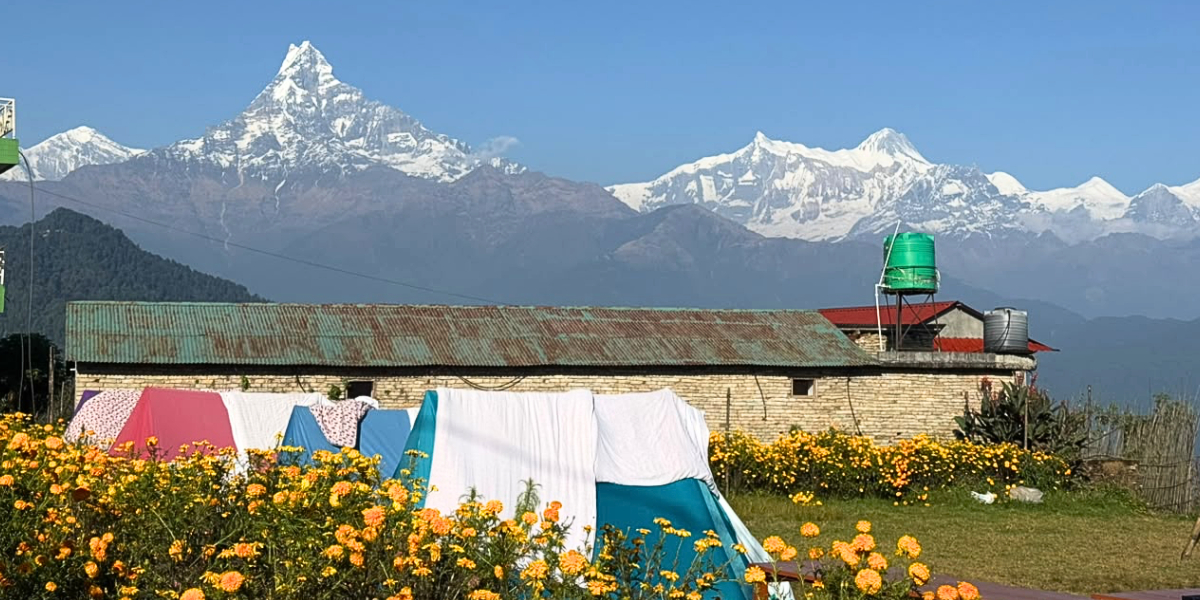
7. Views: Close Up vs Panorama
Annapurna Base Camp wins for drama. You're inside the Annapurna Sanctuary, a natural amphitheatre surrounded by Annapurna I (8,091 m), Annapurna South (7,219 m), Hiunchuli (6,441 m), Gangapurna and the back of Machhapuchhre. You can walk on snow, look down onto the Annapurna South Glacier and its moraine, and see crevasses and meltwater pools close up.
Mardi Himal wins for panoramas. From the ridge you see Machhapuchhre, Mardi Himal (5,587 m), Annapurna South, Hiunchuli and Dhaulagiri in one sweep, often above a sea of cloud. You see them from a distance, though. You won't stand among glaciers or crevasses.
8. Can You Combine Mardi Himal and Annapurna Base Camp?
Yes. The two treks sit side by side, separated by the Modi Khola valley. You can link them into one longer trip of about two weeks on the trail.
• Mardi Himal first: Walk the ridge to Base Camp, come down through Landruk, tolka and the villages to Jhinu Danda, then follow the ABC trail up through Chhomrong. Mardi Himal is great acclimatisation for the Sanctuary.
• ABC first: Reach Annapurna Base Camp, come back down to Jhinu Danda for the hot springs, then cross over and climb the Mardi Himal ridge from the other side.
Ask us about a custom combined itinerary.
9. Best Time and Cost
The best seasons are the same for both treks. Autumn (October–November) brings the clearest skies. Spring (March–May) is warmer, and the rhododendrons are flowering on the Mardi ridge. Winter is quiet and cold, and Mardi Himal is the safer choice because heavy snow raises the avalanche risk on the ABC trail. We don't recommend the monsoon (June–September) for first-timers on either route.
With Take On Nepal, the Mardi Himal Trek is 11 days from AUD 1,290. The Annapurna Base Camp Trek with Flight is 12 days from AUD 2,390. Both include guides, porters, permits, tea house accommodation and meals on the trek.
Our Verdict
If it's your first Himalayan trek, you're travelling with family, or you'd rather have fewer stairs, fewer crowds and less cold, choose Mardi Himal. If you want to walk on snow, see glaciers up close and take on a bucket-list challenge, choose Annapurna Base Camp. If you want both, combine them.
Ready to choose? Explore the Mardi Himal Trek or the Annapurna Base Camp Trek, or get in touch and we'll help you plan the right one.
Frequently Asked Questions
Is Mardi Himal easier than Annapurna Base Camp?
Yes. It's shorter, at about 40–50 km in total compared with about 85 km for ABC. The climb is gradual, with far fewer stone steps, and you sleep no higher than about 3,580 m.
Which is higher, Mardi Himal Base Camp or Annapurna Base Camp?
Mardi Himal Base Camp, at about 4,500 m. Annapurna Base Camp is at 4,130 m. On Mardi Himal you visit Base Camp on a day trip and sleep lower.
Is Mardi Himal good for beginners and families?
Yes. It's our top recommendation for first-time trekkers, families and older walkers.