28 Nov 2026 · @Take On Nepal
SEO brief (for the website editor, not for publishing)
Field | Value |
|---|---|
Meta title (56 chars) | Learn Basic Nepali: 20 Words & 10 Phrases for Travellers |
Meta description (155 chars) | Planning a trek in Nepal? Learn 20 essential Nepali words, 10 everyday phrases, how to introduce yourself, and what to order: momo, dal bhat, chiya and more. |
URL slug | /blog/basic-nepali-words-phrases-for-travellers |
Focus keyword | basic Nepali phrases for travellers |
Secondary keywords | Nepali words for tourists, how to say hello in Nepali, thank you in Nepali, Namaste meaning, Nepali food names, dal bhat, momo, Nepali tea chiya, learn Nepali before trekking, Everest Base Camp trek tips |
Publishing checklist:
Use the post title as the only H1 and keep the H2 headings below as they are; they target real search questions.
Add FAQ schema (FAQPage) using the FAQ section at the end.
Add 3–5 photos (dal bhat plate, momo, a guide with trekkers, a teahouse) with descriptive alt text, e.g. "Nepali dal bhat set served at a teahouse on the Everest Base Camp trek".
Link from this post to your Everest Base Camp trek page, your women's trek page and your contact or booking page; link back to this post from each trek page's "Before you go" section.
Share it on your social channels and in your pre-departure emails to booked trekkers; returning visitors help rankings.
Why learn a little Nepali before you go?
A few words of Nepali will change your trip more than any piece of gear. Say "Namaste" on the trail and you get a smile back. Say "Khana mitho chha!" (the food is delicious) at a teahouse and you might get a second helping of dal bhat.
Nepali (नेपाली) is Nepal's official language and the language most Nepalis share, even though the country has more than 120 local languages. It's written in Devanagari script, the same script used for Hindi. You don't need to read it, though. Every word in this guide is spelled out in English letters with an easy pronunciation guide.
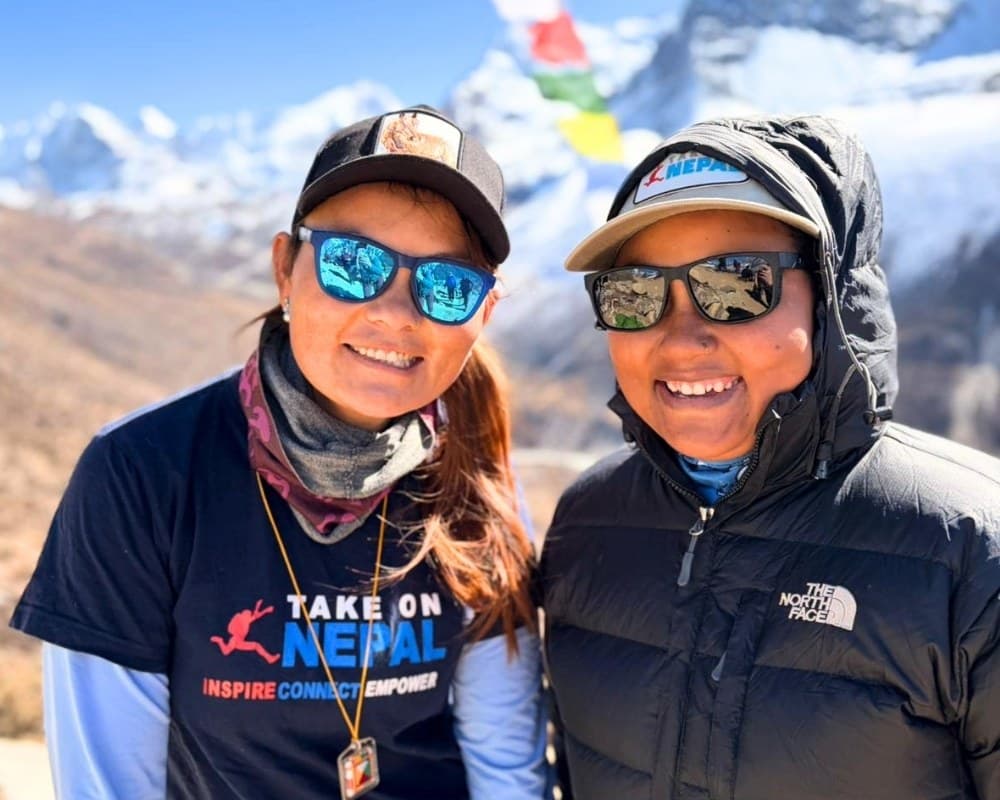
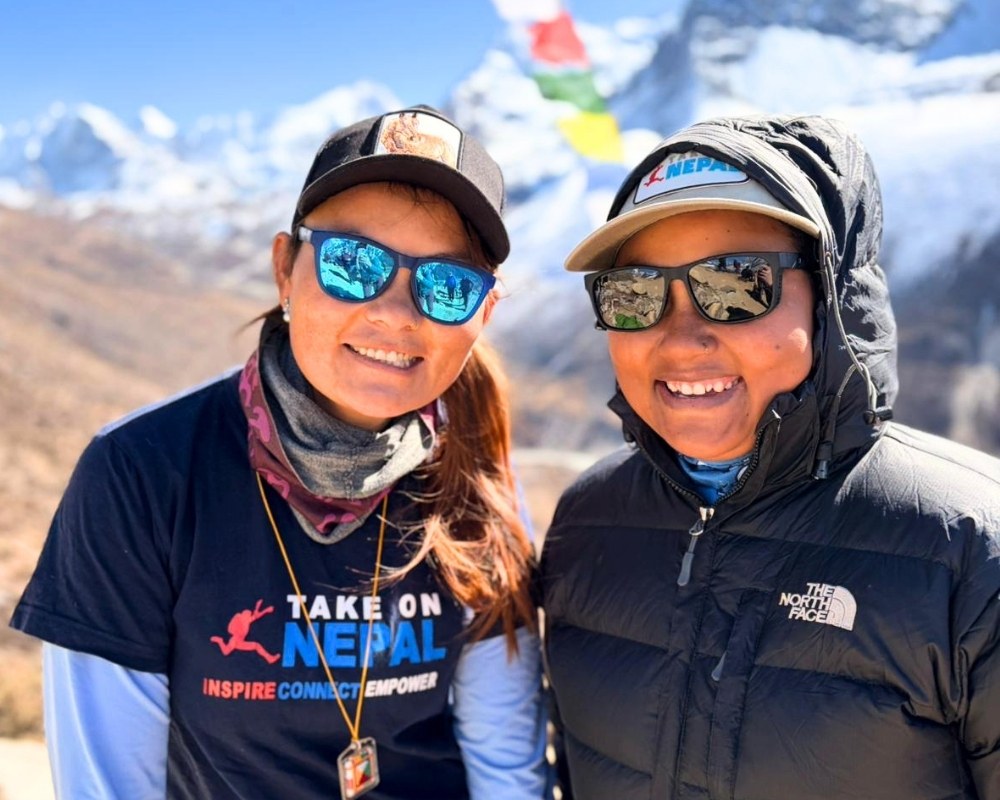
At Take On Nepal, our women guides and porters love it when trekkers try a few words, so this guide is a great place to start before your trek.
How to learn Nepali: 6 simple tips for travellers
Start with greetings and thanks. "Namaste" and "Dhanyabad" will get you through most of your day. Learn them first.
Learn 5 words a day. Start two to three weeks before you fly and you'll arrive knowing all 20 words below. Flashcards or a notes app on your phone work well.
Listen before you speak. Nepali music and short YouTube lessons help you pick up the rhythm. Nepali is spoken fairly evenly, without strong stress on any syllable.
Use the polite forms. Say "tapaai" (you, respectful) rather than "timi" (you, casual) with anyone you've just met. Add "-ji" after a name to show respect, e.g. "Som-ji".
Practise with your guide. Guides are often happy to teach you a new word each day on the trail. Ask "Nepali ma ke bhanchha?" (What is it called in Nepali?).
Don't worry about mistakes. Nepalis are famously warm and will appreciate the effort even if your pronunciation isn't perfect.
Top 20 Nepali words every traveller should know
These 20 words cover greetings, food, directions and getting around. They're the ones you'll hear most in Kathmandu and on the trail.
# | Nepali | Script | Say it like | Meaning |
|---|---|---|---|---|
1 | Namaste | नमस्ते | nuh-muh-stay | Hello / goodbye (respectful) |
2 | Dhanyabad | धन्यवाद | dhun-ya-baad | Thank you |
3 | Hajur | हजुर | huh-jur | Yes (polite) / Pardon? |
4 | Ho | हो | ho | Yes / it is |
5 | Hoina | होइन | hoy-nuh | No / it isn't |
6 | Thik chha | ठीक छ | teek chuh | OK / fine |
7 | Ramro | राम्रो | raam-ro | Good / nice / beautiful |
8 | Pani | पानी | paa-nee | Water |
9 | Khana | खाना | khaa-nuh | Food / meal |
10 | Chiya | चिया | chee-yaa | Tea |
11 | Mitho | मीठो | mee-tho | Delicious |
12 | Pugyo | पुग्यो | poog-yo | Enough (when offered more food) |
13 | Kati | कति | kuh-tee | How much / how many |
14 | Kaha | कहाँ | kuh-haan | Where |
15 | Bistarai | बिस्तारै | bis-taa-rye | Slowly |
16 | Charpi | चर्पी | chur-pee | Toilet |
17 | Sathi | साथी | saa-tee | Friend |
18 | Didi | दिदी | dee-dee | Older sister (polite way to address a woman) |
19 | Dai | दाइ | dye | Older brother (polite way to address a man) |
20 | Bahini | बहिनी | buh-hi-nee | Younger sister (for a younger woman) |
Tip: Nepalis often call each other "didi" and "dai" even when they aren't related. Using them with your guide, porter or teahouse owner sounds friendly and respectful. You'll hear "bistarai, bistarai" (slowly, slowly) on every trek; it's the golden rule for avoiding altitude sickness.
Top 10 Nepali sentences for your trip
With these 10 sentences you can greet people, shop, eat and ask for help.
# | Nepali | Script | Meaning |
|---|---|---|---|
1 | Tapaailaai kasto chha? | तपाईंलाई कस्तो छ? | How are you? |
2 | Malaai sanchai chha. | मलाई सन्चै छ। | I'm fine. |
3 | Yo kati ho? | यो कति हो? | How much is this? |
4 | Ali sasto garnus na. | अलि सस्तो गर्नुस् न। | Please make it a little cheaper. |
5 | Charpi kaha chha? | चर्पी कहाँ छ? | Where is the toilet? |
6 | Malaai pani chahiyo. | मलाई पानी चाहियो। | I need water. |
7 | Khana dherai mitho chha! | खाना धेरै मीठो छ! | The food is very delicious! |
8 | Maile bujhina. | मैले बुझिनँ। | I didn't understand. |
9 | Bistarai bolnus. | बिस्तारै बोल्नुस्। | Please speak slowly. |
10 | Pheri bhetaunla! | फेरि भेटौँला! | See you again! |
Good to know: "chha" means "is" or "there is", and "chhaina" means "isn't" or "there isn't". Ask "Wi-fi chha?" at a teahouse and you'll understand the answer either way. Ending a request with "-nus" (as in "garnus", "bolnus") makes it polite, like adding "please".
How to say your name in Nepali
To say your name in Nepali, use "Mero naam ___ ho": "My name is ___". Nepali puts the verb at the end, so your name goes in the middle.
Nepali | Script | Meaning |
|---|---|---|
Mero naam Sarah ho. | मेरो नाम सारा हो। | My name is Sarah. |
Tapaaiko naam ke ho? | तपाईंको नाम के हो? | What is your name? |
Ma Australia bata aaeko hu. | म अष्ट्रेलियाबाट आएको हुँ। | I'm from Australia. |
Tapaailaai bhetera khushi laagyo. | तपाईंलाई भेटेर खुशी लाग्यो। | Nice to meet you. |
A small detail locals will notice: women usually say "aaeki hu" and men say "aaeko hu" in "I'm from Australia". Swap in your own country, e.g. "Ma New Zealand bata aaeki hu".
Put it all together on day one: "Namaste! Mero naam Sarah ho. Ma Australia bata aaeki hu. Tapaailaai bhetera khushi laagyo."
Top 10 Nepali dishes and how to say them
These are the ten dishes you're most likely to eat, and want to eat again, in Nepal.
# | Dish | Script | Say it like | What it is |
|---|---|---|---|---|
1 | Dal bhat | दाल भात | daal bhaat | Lentil soup with rice, vegetable curry, pickle and greens. Nepal's everyday meal, often with free refills at teahouses. |
2 | Momo | मोमो | moh-moh | Dumplings filled with chicken, buff (water buffalo) or vegetables. Served steamed, fried or "jhol" (in a spicy soup). |
3 | Thukpa | थुक्पा | thook-paa | A warming Himalayan noodle soup, popular in teahouses at altitude. |
4 | Sel roti | सेल रोटी | sel ro-tee | A sweet, ring-shaped fried rice bread, made especially during the Tihar and Dashain festivals. |
5 | Samay baji | समयबजी | suh-my baa-jee | A Newari platter of beaten rice with spiced meat, beans, egg and pickles, found around Kathmandu Valley. |
6 | Dhido | ढिँडो | dhee-ndo | A thick porridge of buckwheat, millet or corn flour, eaten by hand with curry. A traditional hill-village staple. |
7 | Gundruk | गुन्द्रुक | goon-drook | Fermented, dried leafy greens with a tangy flavour, served as a soup or pickle alongside dal bhat. |
8 | Sekuwa | सेकुवा | say-koo-waa | Spiced meat skewers grilled over a wood fire. A favourite evening snack in Kathmandu and eastern Nepal. |
9 | Chatamari | चटामरी | chuh-taa-muh-ree | A thin Newari rice-flour crepe topped with egg, minced meat or vegetables, sometimes called "Nepali pizza". |
10 | Juju dhau | जुजु धौ | joo-joo dhow | "King of curds": a creamy, sweet yoghurt set in clay pots, famous in Bhaktapur. |
To order, say "Ek plate momo dinus" (एक प्लेट मोमो दिनुस्): "One plate of momo, please". Swap "momo" for any dish. Vegetarian? Say "Ma shakahari hu" (म शाकाहारी हुँ), "I'm vegetarian".
You'll hear trekkers and guides joke "Dal bhat power, 24 hour!" It's true: this filling meal is the fuel for almost every trek in Nepal.
5 most popular drinks in Nepal
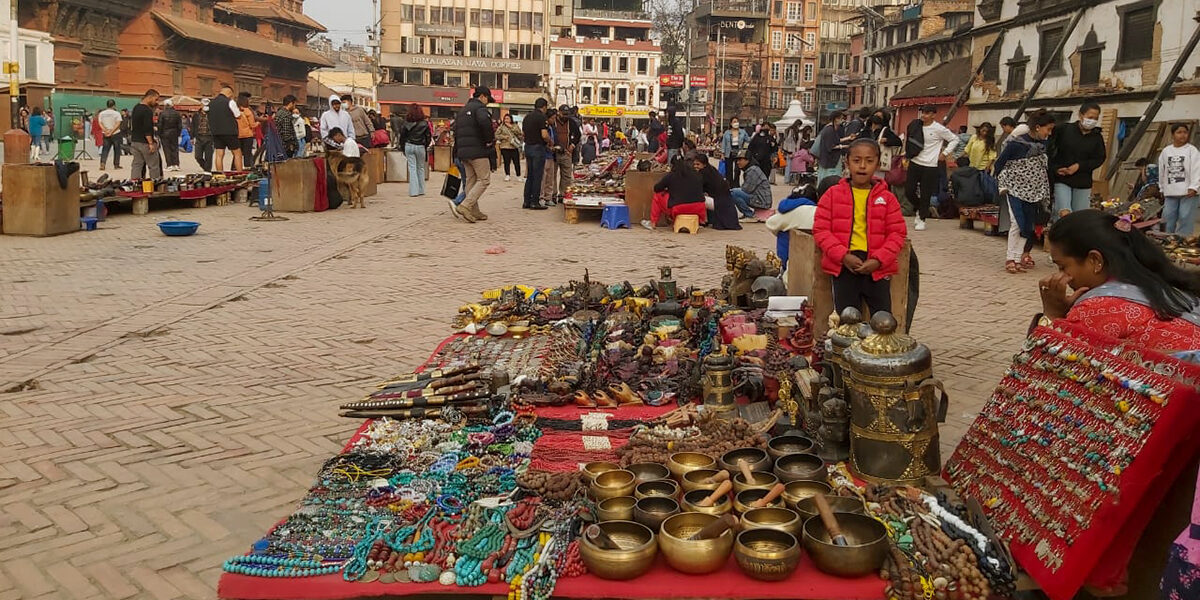
Tea is everywhere in Nepal, but locals have a few other favourites too.
# | Drink | Script | Say it like | What it is |
|---|---|---|---|---|
1 | Chiya | चिया | chee-yaa | Sweet milk tea, often spiced with ginger, cardamom or cloves. Offered as a welcome in homes and teahouses. |
2 | Lassi | लस्सी | luss-ee | A chilled yoghurt drink, sweet or salty. Try it in Kathmandu or Bhaktapur, famous for its curd (juju dhau). |
3 | Butter tea (solja) | सोल्जा | sol-jaa | Salty tea churned with butter, a Sherpa and Tibetan favourite. You'll be offered it in the Everest region. |
4 | Tongba | तोङ्बा | tong-baa | Warm fermented millet beer sipped through a bamboo straw, popular in eastern Nepal and the mountains. |
5 | Raksi | रक्सी | ruck-see | A clear home-distilled spirit made from millet or rice, served at festivals and family celebrations. |
To order tea, say "Ek cup chiya dinus" (One cup of tea, please). For tea without milk, ask for "kalo chiya" (black tea). Want it without sugar? Say "chini nahaalnus" (चिनी नहाल्नुस्), "no sugar, please".
A trekking tip: save the tongba and "raksi" (local spirit) for after your trek. Alcohol makes altitude sickness more likely, so stick to chiya, hot water and ginger-lemon-honey tea on the way up.
Quick Nepali etiquette tips
Say "Namaste" with your palms pressed together at your chest. It works for hello and goodbye.
Give, receive and eat with your right hand.
Take off your shoes before entering a home or temple.
Walk clockwise around stupas and prayer wheels.
Ask before photographing people: "Photo khichna milchha?" (May I take a photo?).
Frequently asked questions
How do you say hello in Nepali? Say "Namaste" (nuh-muh-stay). It's polite, works at any time of day, and also means goodbye.
How do you say thank you in Nepali? Say "Dhanyabad" (dhun-ya-baad). Among friends, a warm smile and "Namaste" often say thank you too.
What does Namaste mean? It roughly means "I bow to you". It's a respectful greeting used across Nepal.
Is Nepali hard to learn? The basics are easy. Pronunciation is fairly regular, and 20 words plus a few sentences are enough for friendly everyday conversation.
Do people speak English in Nepal? English is common in Kathmandu, Pokhara and among trekking guides. In remote villages and teahouses, a few Nepali words help a lot.
What is the most popular food in Nepal? Dal bhat (lentils and rice) is the national everyday meal. Momo dumplings are the favourite snack.
Ready to practise your Nepali in the Himalayas?
The best way to learn Nepali is to use it. On a Take On Nepal trek, you'll walk with our women guides and porters who will happily help you with new words every day. Your trip also creates jobs and training for women in Nepal.
Explore our treks, including Everest Base Camp, and contact us to start planning. Pheri bhetaunla: see you in Nepal!